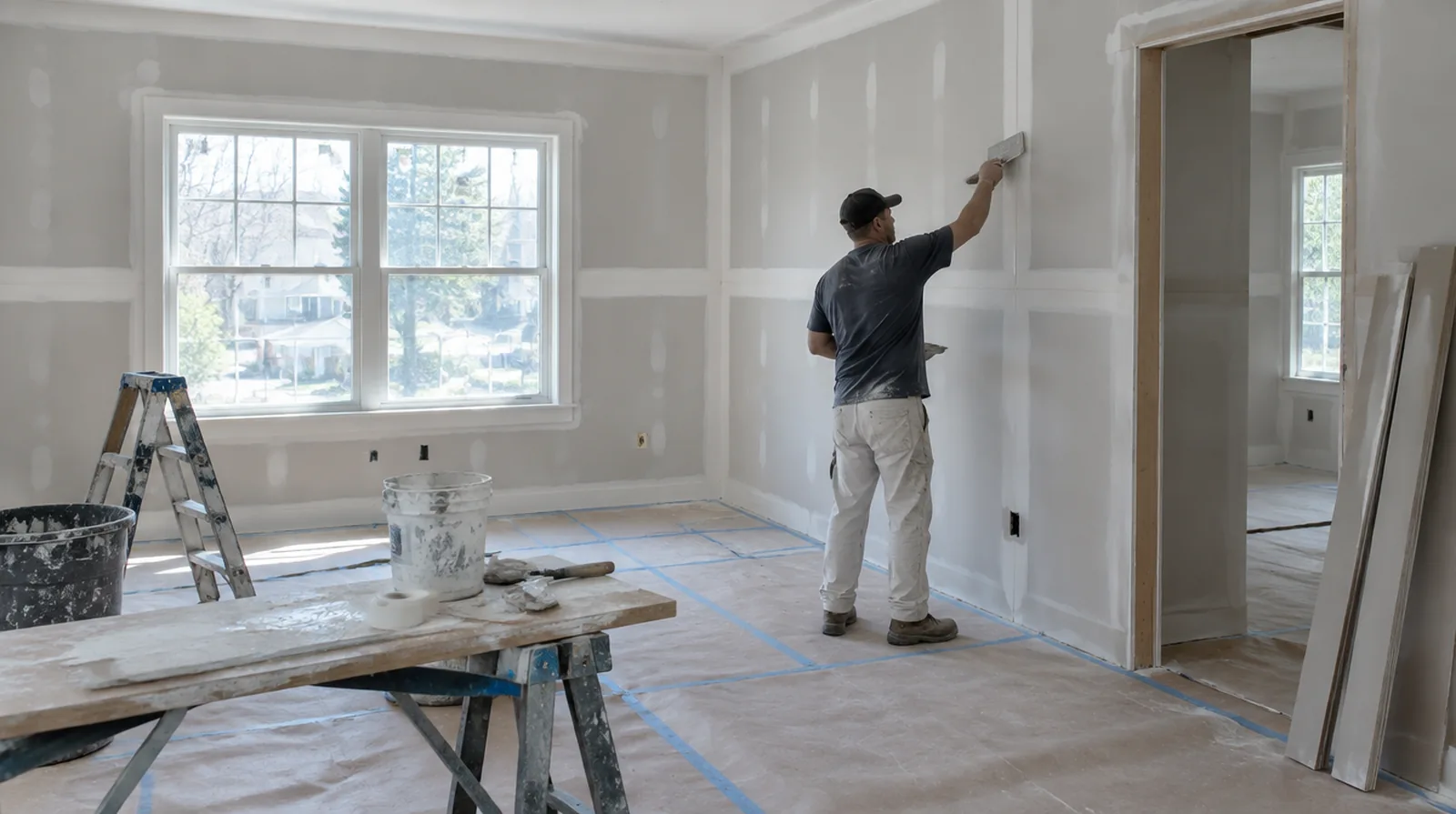
Prepare a sample area
A small test helps establish particle size, spacing and the amount of flattening needed. Approve the sample before extending the treatment across the entire repaired area. Where the quoted work stops before painting, request an explicit description of what remains so the next decorating stage can be priced realistically.
Consider hand applied surfaces
Troweled textures need attention to tool direction, pressure and spacing between repeated shapes. A sample is especially helpful when the existing finish was created without a regular sprayed pattern. If the final paint is already chosen, share its sheen and color early because those choices influence how preparation of the surface is judged.
Use appropriate primer
A new texture and the painted wall around it can take up paint unevenly. A suitable primer helps the paint system perform consistently without changing the texture profile unnecessarily. Where the quoted work stops before painting, request a well defined description of what remains so the next decorating stage can be priced realistically.
Set realistic blend expectations
Age, paint buildup and irregular original application can limit how closely a patch can blend. A wider wall treatment may be worth discussing if a localized repair remains conspicuous. While a removed panel exposes the wall cavity, complete the necessary review of concealed work before replacement board closes the opening.
Identify the existing pattern
Orange peel, knockdown and hand applied textures create different depths and shadow lines. Examine the surface in the light the interior actually receives before choosing a spray or hand applied method. For a repair that crosses several surfaces, measure the affected planes separately so the estimate can explain where each finishing treatment starts and stops.
Control application conditions
Spray settings, material consistency and working distance all influence the resulting texture. A knockdown pass also depends on when the applied material reaches the right condition in that room. If the wall surface work belongs to a broader renovation, coordinate its order with flooring, cabinetry and trim rather than scheduling finishing in isolation.
Judge from normal positions
Close inspection of a wet sample is less useful than reviewing the dry finish from ordinary room viewpoints. The planned paint sheen and oblique light both belong in the final appearance discussion. If the project is part of a larger remodel, settle the sequence with flooring, trim and cabinet work before setting a final finishing date.
Allow time before painting
Applying paint before the texture has dried can disturb the pattern or produce uneven absorption. Establish whether the proposal includes that decorative stage or hands the surface over to another trade. Where flooring is staying in place, agree on protective coverings and check that tools and material handling will not damage the visible finish.
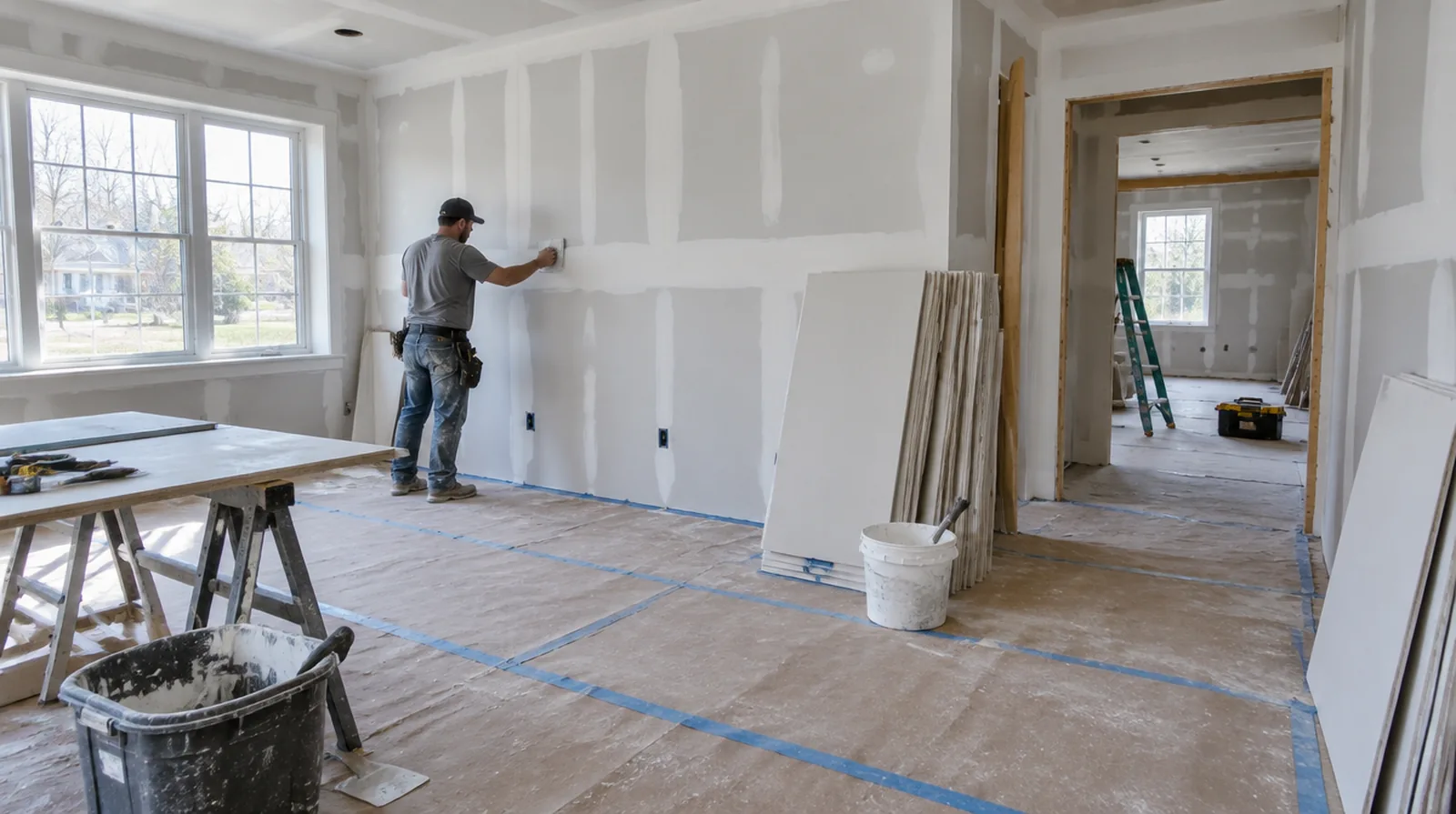
Study the paint layers
Repeated painting can soften an old pattern and change how its peaks reflect light. Matching the wall surface as it looks now could call for a differing application from the pattern that was first installed. For a surface carrying numerous paint layers, discuss whether differences in the retained profile or sheen justify decorating a broader area.
Protect surrounding finishes
Texture overspray can settle on trim, flooring and nearby fittings if they are not masked. Protect the full reach of the operation, including fittings and trim beyond the original damaged spot. In a room with little free floor space, identify temporary storage for belongings and establish enough clearance for the work before delivery.
Project context in Hempstead
Consider door swings, furniture movement and where protective floor covering can remain safely between visits. Heating in winter and summer moisture both affect conditions inside a closed room; a calendar estimate should leave room for actual drying rather than a fixed promise based only on patch size.
Scope questions before finishing
When the project space includes a doorway, check the clearance for panel movement as well as the amount of space available for finishing tools.
For an initial assessment from pictures, provide an overall room photograph and a detailed view of the defect so both context and scale are apparent.
If the original finish is unusual, keep a small reference sample or a close photograph to support the discussion about blending and restoration.
At a ceiling or wall containing fittings, assign removal and reinstatement duties for the affected devices before repair access is needed.
At a surface receiving strong window light, review a dried trial from the side in addition to the normal straight view of the wall.
For a repair that crosses several surfaces, measure the affected planes separately so the estimate can explain where each finishing treatment starts and stops.
If the wall work belongs to a broader renovation, coordinate its order with flooring, cabinetry and trim rather than scheduling finishing in isolation.
If the problem developed after another renovation, explain which nearby materials or building systems changed before the damage became visible.
For a wall receiving a decorative covering, provide its preparation requirements early enough for the drywall finish to support that product.
If the project is part of a larger remodel, settle the sequence with flooring, trim and cabinet work before setting a final finishing date.
For a room that stays in use, set a workable boundary around construction while retaining the access people need for normal daily activities.
For walls beside bright windows, review a dry sample from an oblique angle as well as looking straight at the repaired surface.
Explore the Hempstead drywall overview for related options, or read the project planning information before arranging the next stage.
More planning details for Hempstead
For a Hempstead house renovation, begin by separating the room that needs surface work from the routes the household still uses. A hallway repair can interrupt several rooms even when the damaged board covers only a small area. Before the first coat of paint, review how the repaired wall meets existing trim.