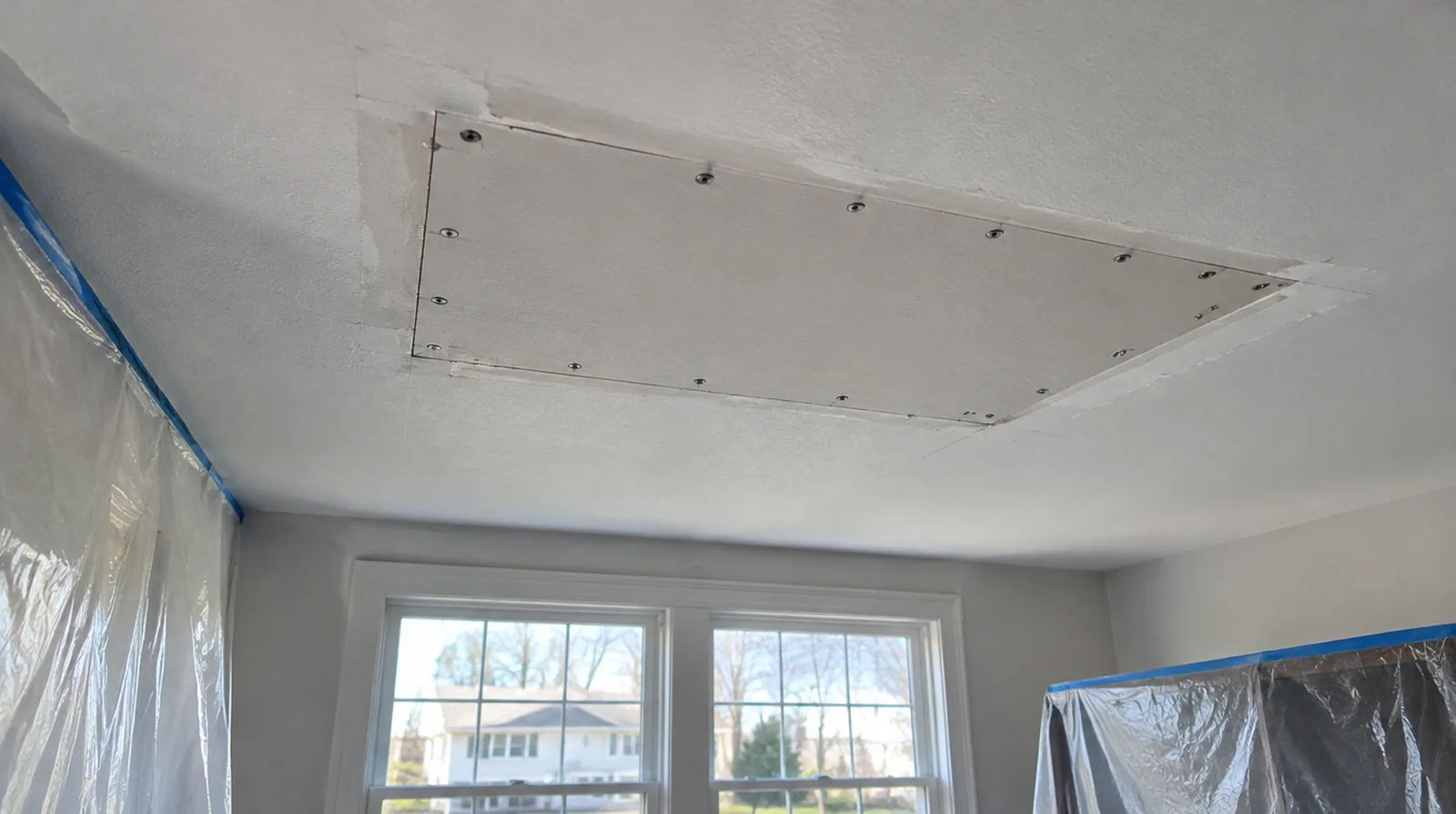
Treat the joints overhead
Reinforce the ceiling patch joints and taper the finishing layers well beyond their edges. Overhead seams can be conspicuous because windows often send light almost parallel to the ceiling. When the same defect has returned, share information about previous repair methods so the next assessment can consider why they did not last.
Set the repainting scope
A small fresh white patch can stand out against an older ceiling even when the surface is level. Painting to a natural boundary may be preferable to touching up only the repair. Before comparing two proposals, check that both include the same protection, finishing and cleanup boundaries instead of comparing totals alone.
Cut back to sound material
A reliable replacement cannot depend on board that has lost strength through water exposure. The removal boundary should reach stable material and allow the replacement to be properly supported. For a wall receiving a decorative covering, provide its preparation requirements early adequate for the drywall finish to support that product.
Review the room after drying
Once the coats are dry, view the ceiling from normal room positions and near its principal windows. Identify outstanding paint preparation while protection and access are still available. Where a finished perimeter is prominent, decide whether trim stays in position or is removed before agreeing how the new surface meets that edge.
Check the source of damage
A ceiling stain or soft area may be caused by plumbing or another moisture source above the room. The cause needs resolution before cosmetic repair can reasonably be expected to last. At a ceiling or wall containing fittings, assign removal and reinstatement duties for the affected devices before repair access is needed.
Separate fixtures from board work
Electrical fittings, sprinkler components and mechanical grilles can involve other trades or building approvals. Clarify who disconnects and reinstalls anything that interferes with access to the damaged area. When a quote includes multiple visits, ask what happens during each stage and when the space needs to remain undisturbed between coats.
Discuss texture expectations
A smooth ceiling and a textured ceiling need distinct finishing plans around the repaired section. A representative sample makes it easier to judge whether the current pattern can be blended locally. When comparing competing estimates, make sure their protection, surface finish and disposal allowances describe equivalent work before comparing the final prices.
Plan overhead access
Ceiling height and furniture layout influence the platform and protection needed for safe working access. Delicate floors, bulky furniture and fittings may add more setup work than the patch dimensions suggest. At a repair beside an opening, allow clearance for moving board through the doorway and space to use the finishing tools effectively.
Address isolated stains
Inactive discoloration may require a primer selected to block the remaining stain. Verify that the source is no longer active instead of treating primer as a remedy for damp material. When a paint contractor follows the drywall work, define the surface condition being handed over and decide who handles any minor final touch ups.
Identify the existing surface
A ceiling may contain gypsum board, plaster or several layers from earlier renovations. The repair method should match the actual construction instead of assuming every white surface is drywall. When a wall has repeated defects, keep a record of earlier repair attempts so a new assessment does not simply repeat an unsuccessful approach.
Project context in Hempstead
If the old coating is faded or its color cannot be matched, a whole wall repaint may make more sense than repeated small touch ups. Before the first coat of paint, review how the repaired wall meets existing trim.
Scope questions before finishing
If the proposal requires return visits, identify the purpose of each stage and the intervals during which finishing material needs to remain undisturbed.
Where occupants have dust sensitivity concerns, agree containment and cleaning measures before settling the way the room will be staged.
When panel replacement exposes a cavity, resolve any required inspection before that opening is closed and the finishing work begins.
Where a surface has been painted many times, consider whether differences in texture or sheen will require a wider decorative treatment.
For a room that stays in use, set a workable boundary around construction while retaining the access people need for normal daily activities.
For a room with restricted airflow, plan drying conditions alongside dust protection and the comfort of people occupying neighboring spaces.
If a household member is sensitive to dust, discuss containment and cleaning expectations before choosing how to stage the room work.
When the protected room includes a doorway, check the clearance for panel movement as well as the amount of space available for finishing tools.
At a surface receiving strong window light, review a dried trial from the side in addition to the normal straight view of the wall surface.
When photographs are used for an initial discussion, include a wide room view as well as a close view so scale and surrounding finishes are understandable.
Where a finished perimeter is prominent, decide whether trim stays in position or is removed before agreeing how the new surface meets that edge.
Where several contractors share the renovation, identify the inspection and handover milestones that determine when each following stage can proceed.
Explore the Hempstead drywall overview for related options, or read the project planning information before arranging the next stage.
More planning details for Hempstead
For a Hempstead house renovation, begin by separating the room that needs surface work from the routes the household still uses. A hallway repair can interrupt several rooms even when the damaged board covers only a small area. Consider door swings, furniture movement and where protective floor covering can remain safely between visits.