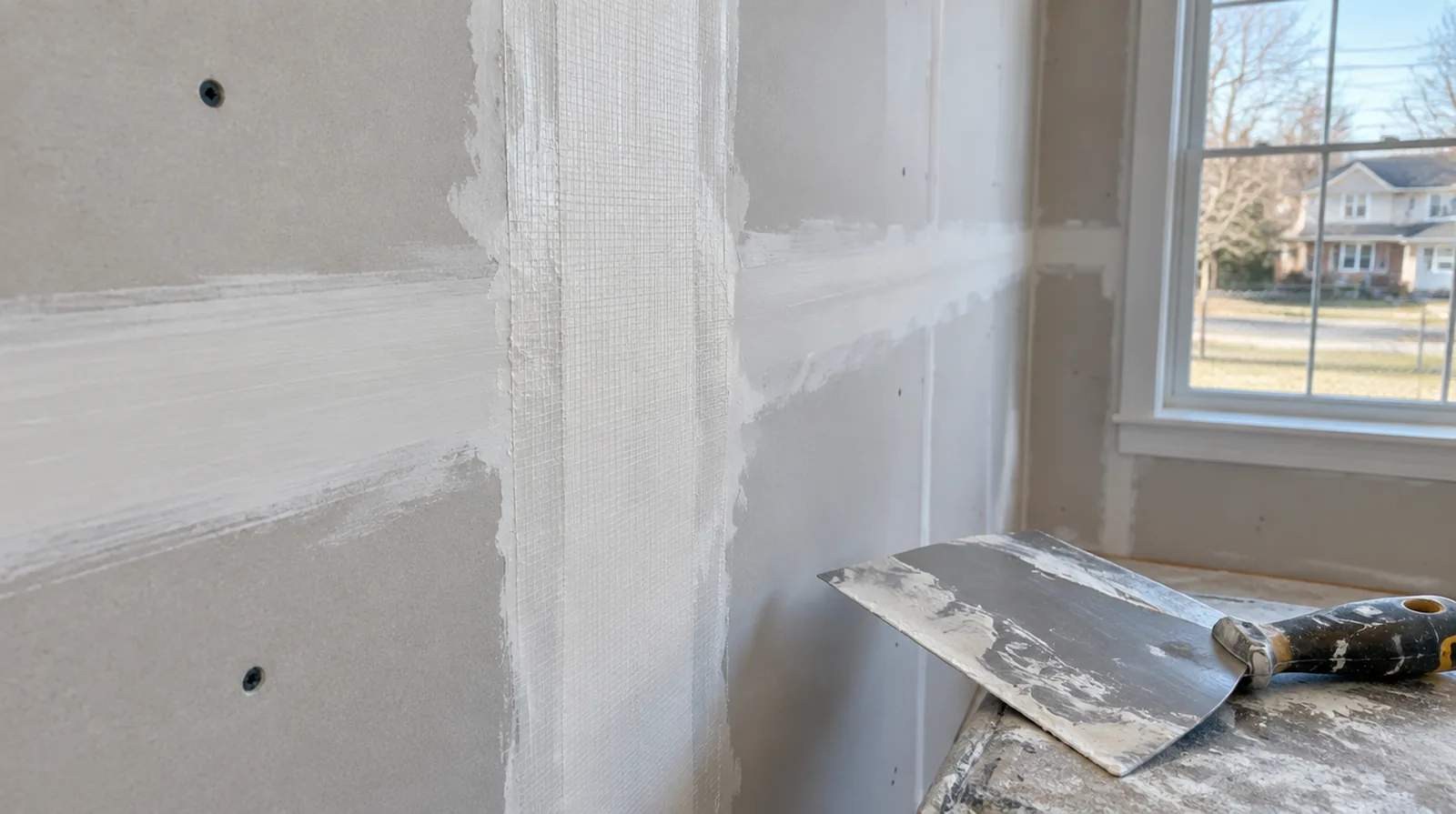
Keep external corners straight
A corner profile only produces a straight noticeable line when it is fitted and coated correctly. Resolve distortion or damage to the bead before successive coats make correction more challenging. At a ceiling or wall containing fittings, assign removal and reinstatement duties for the affected devices before repair access is needed.
Build the seam gradually
Successive coats widen the finished area and soften the transition from joint to board face. Square cut sheet ends need particular care because they do not offer the recess of tapered factory edges. For a limited patch requiring substantial setup, assess the complete package of access and protection rather than relating cost only to the opening size.
Inspect the whole wall
Checking only the joint lines misses transitions near corners, ceiling edges and electrical boxes. Check the finished plane under the planned lighting and from a side angle where possible. For walls beside bright windows, review a dry sample from an oblique angle as well as looking straight at the repaired surface.
Use controlled sanding
Sanding should refine small tool marks instead of grind away a badly shaped joint. Dust extraction and protection matter even for a room with only a few seams. For an older repair with no clear history, describe when the mark first appeared and whether it has changed through more than one season.
Embed the tape
A continuous bedding layer supports the tape and reduces the chance of air bubbles along the seam. At an internal angle, form a clean crease and finish both sides without leaving unsupported edges. If the problem developed after another renovation, explain which nearby materials or building systems changed before the damage became noticeable.
Consider a skim layer
Light passing across a wall can emphasize the difference between finished joints and the panel paper. Where the finish specification requires greater uniformity, consider an appropriate broad skim application. If the completion date matters most, allow for intervals between coats as well as active labor instead of assuming the entire process happens continuously.
Agree on the visual standard
Agree how the completed wall will be viewed and decorated before choosing the finishing standard. A stated finish level helps both the drywall trade and the decorating trade work toward the same result. When reviewing the finished work, use the agreed lighting and natural room viewpoints so the assessment reflects the intended use of the space.
Allow genuine drying time
Do not judge a coat ready solely because its outer face appears firm. Temperature, air movement and room humidity affect the interval between finishing stages. Where the quoted work stops before painting, request a clear description of what remains so the next decorating stage can be priced realistically.
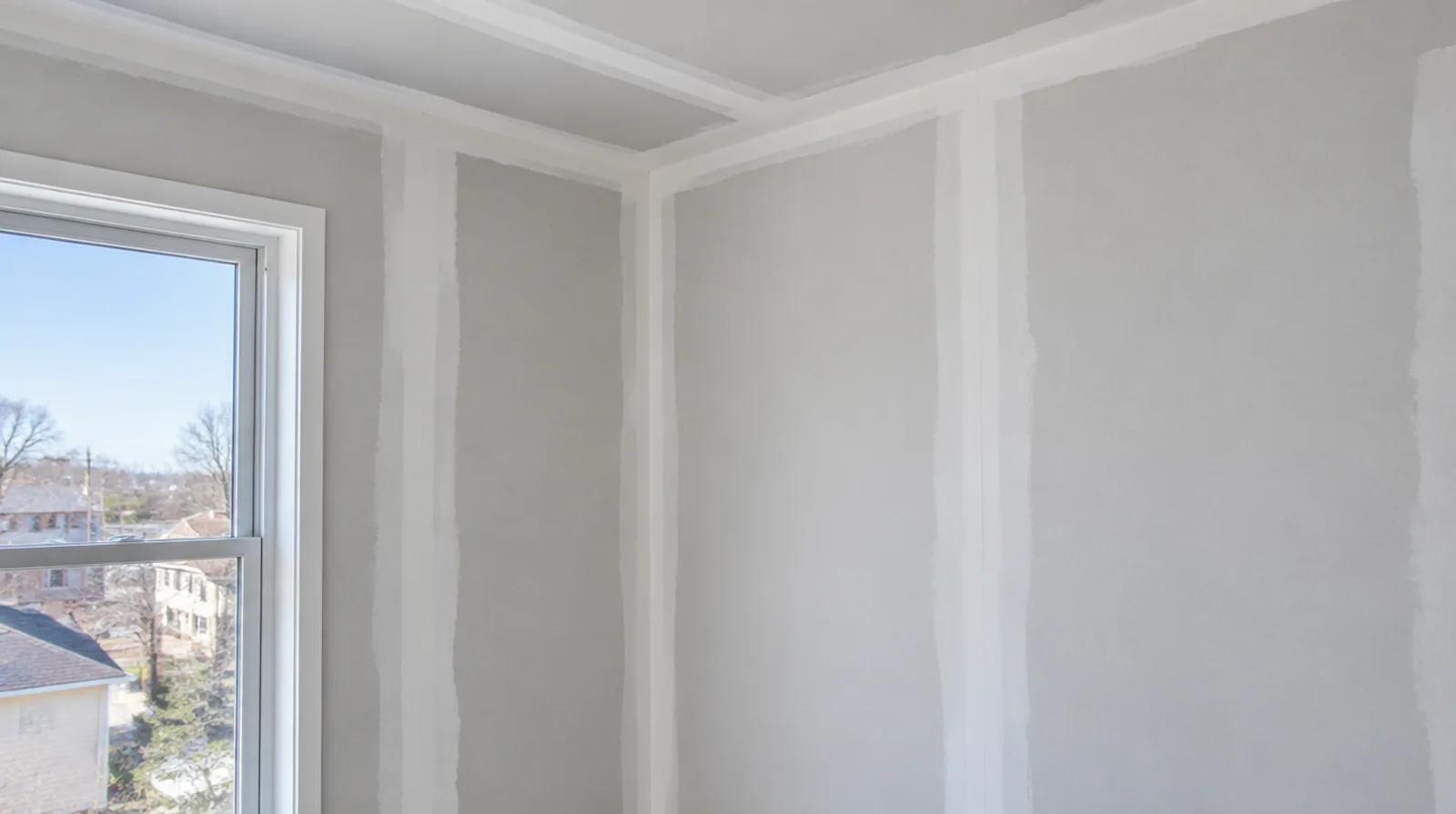
Coordinate with the painter
Primer can reveal small imperfections that were difficult to see on the raw white surface. Decide beforehand who handles minor touch ups and whether a post primer review is included. For a limited patch requiring substantial setup, assess the complete package of access and protection rather than relating cost only to the opening size.
Cover fastener heads
Fastener dimples need sufficient compound to level the surface without leaving raised spots. A screw that protrudes or has broken the paper ought to be addressed before it is concealed. When a paint contractor follows the drywall work, define the surface condition being handed over and decide who handles any minor final touch ups.
Project context in Hempstead
Heating in winter and summer moisture both affect conditions inside a closed room; a calendar estimate should leave room for actual drying rather than a fixed promise based only on patch size. For a Hempstead house renovation, begin by separating the room that needs surface work from the routes the household still uses.
Scope questions before finishing
When concealed damage is possible, establish how additional findings and any proposed removal will be recorded before the scope changes.
At a surface receiving strong window light, review a dried trial from the side in addition to the normal straight view of the wall surface.
At the handover inspection, review the finish from ordinary room positions using the lighting conditions that were agreed for the work.
If a household member is sensitive to dust, discuss containment and cleaning expectations before choosing how to stage the interior work.
While a removed panel exposes the wall cavity, complete the necessary review of concealed work before replacement board closes the opening.
When the same defect has returned, share information about previous repair methods so the next assessment can consider why they did not last.
If a room has only limited ventilation, discuss how the finishing materials can dry without disrupting comfort or spreading dust elsewhere.
For a project involving a building manager, confirm access hours and protection requirements before promising a start date or a short completion window.
If access passes through a shared space, arrange protection and a delivery route that do not unnecessarily obstruct other occupants.
If there is a fixed move in date, reserve adequate time for the coating stages after drywall work rather than counting only the installation period.
When the history of a repair is uncertain, note when it became visible and whether its appearance has altered across distinct seasons.
Where a finished perimeter is prominent, decide whether trim stays in position or is removed before agreeing how the new surface meets that edge.
Explore the Hempstead drywall overview for related options, or read the project planning information before arranging the next stage.
More planning details for Hempstead
A hallway repair can interrupt several rooms even when the damaged board covers only a small area. Consider door swings, furniture movement and where protective floor covering can remain safely between visits. Before the first coat of paint, review how the repaired wall meets existing trim.